Denver Electrical Pros
You need a licensed and insured Denver commercial electrician who handles design-build to NEC and local amendments, pulls permits quickly, and delivers selective coordination, UL‑listed components, and stamped studies (load analysis, short‑circuit studies, and arc‑flash assessments). Expect torque‑verified installs, IR thermography, insulation resistance checks, and calibrated tools. Get 24/7 emergency dispatch, temporary power, GPS‑routed crews, and time-stamped updates. Require QA/QC, commissioning records, as‑builts, and SLAs. Maximize efficiency with LED/controls, demand response, and EV load management to safeguard people, uptime, and budgets—here's the approach.
Main Points
What Sets Trusted Denver Commercial Electricians Stand Out
Though many electricians proclaim commercial expertise, reliable Denver commercial electricians verify it through licenses, NFPA/NEC compliance, and a documented track record on complex systems. You should check licensed expertise, current insurance, and bonding. Ensure they carry out load calculations, short-circuit studies, arc-flash labeling, and coordination analysis using industry-standard software and stamped documentation. Check procurement discipline: UL-listed gear, spec adherence, and submittal logs. Review commissioning rigor—insulation resistance tests, torque logs, IR thermography, and as-builts provided in editable formats.
Demand transparent scheduling, change-order controls, and closeout packages that include O&M manuals and training. Evaluate client testimonials that cite uptime improvements, defect-free inspections, and on-budget delivery. Verify safety performance with EMR and OSHA logs. Require a single accountable project manager and 24/7 response protocols with documented SLAs.
Core Professional Electrical Solutions for Companies
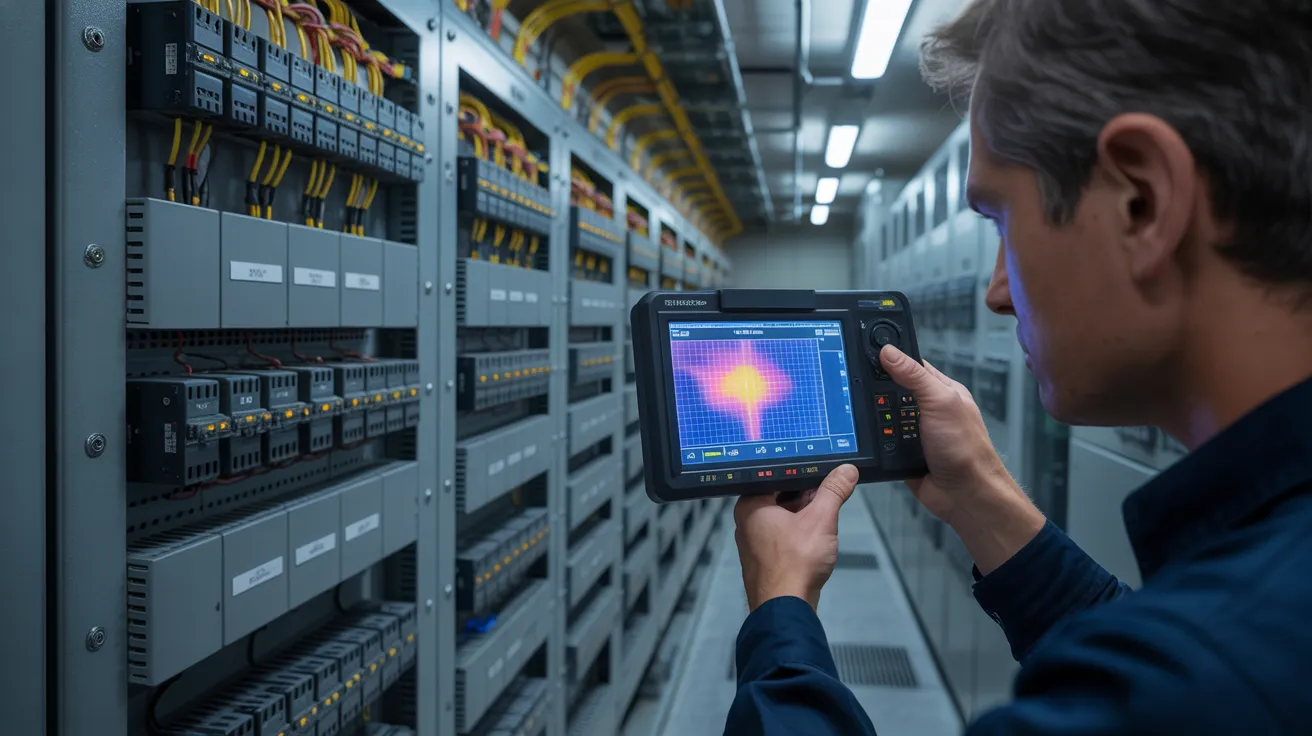
Provide your facility with the necessary electrical foundation: power distribution design/build, service upgrades, panelboards and switchgear installation, dedicated circuits, and code-compliant wiring methods sized by load calculations and fault current. You'll receive accurate short-circuit, arc-flash, and coordination studies that guide device settings and selective tripping. We carry out panel upgrades to expand capacity, optimize loading, and improve reliability, then integrate surge protection at service and distribution levels to shield mission-critical equipment. When capacity requirements evolve, we complete transformer replacement, match impedance, and verify tap settings, ventilation, and clearances. We inspect and resolve grounding systems to deliver low-impedance fault paths and stable reference for sensitive electronics. You can also expect thermal imaging, power quality analysis, UPS integration, generator tie-ins, and preventive maintenance schedules.
Working Through Denver Codes, Permits, and Inspections
You'll need systems designed to satisfy Denver's amendments to the NEC and the Denver Building and Fire Code, including load calculations, grounding, and labeling that pass plan review. We'll map permit pathways (OTC vs. logged) and establish realistic timelines depending on scope, occupancy, and required trade coordination. We also schedule and prepare you for phased inspections—rough, service release, and final—to reduce rework and avoid costly delays.
Compliance with Local Codes
Prior to a single conduit is run, verify that your project conforms to Denver's adopted electrical codes, permitting regulations, and inspection workflows. You're operating under the NEC as amended by Denver, plus local fire and energy provisions. Confirm service sizing, fault current, selective coordination, grounding electrode systems, and working clearances. Validate equipment listings, conductor ampacity, derating, and AFCI/GFCI applications where necessary.
Track code updates released by the city; integrate them into design specs and submittals. Establish discipline with inspection checklists: labeling, torquing lugs to manufacturer specs, bonding of metallic raceways, arc-flash labeling, equipment access, and penetrations sealed with listed firestop systems. Document load calculations, short-circuit studies, and one-lines. Preserve as-builts that match field conditions. When you sequence tasks to code, you eliminate rework and pass inspections cleanly.
Permit and Inspection Timelines
As designs are still on the board, lock in a realistic permit and inspection schedule based on Denver's current review queues and project scope. You'll reduce critical path risk by executing timeline mapping early, aligning engineering deliverables with submittal windows. Define permit sequencing: electrical, building, fire, and right‑of‑way, then stage drawings to support each package. Verify whether your project is eligible for walk‑through, quick permits, or full plan review, and set buffers for corrections. Organize utility cut sheets, load letters, and one‑line diagrams before intake to prevent holds.
Schedule inspections at key milestones: rough‑in stage, service equipment installation, life‑safety, and final inspection. Tie equipment delivery and shutdowns to inspector availability. Review inspection statuses daily and respond within 24 hours. Maintain records of approvals, hold notices, and reinspection fees to retain schedule control.
Identifying and Assessing the Right Electrical Contractor
Although timelines and budgets often dominate planning, selecting and vetting the right electrical contractor begins with objective criteria: licensure in Colorado, proof of insurance and bonding, and a verifiable safety record (for example, EMR, OSHA 300 logs). Confirm the firm's master and journeyman licenses and validate active coverage limits that match your risk profile. Identify licensed contractors with documented NFPA 70/NEC expertise and manufacturer certifications for the equipment you plan to install.
Demand project references with scope, dollar value, and delivery dates. Verify performance through client testimonials and third-party ratings. Review QA/QC procedures, commissioning plans, and change‑order controls. Require detailed submittals, sample job hazard analyses, and supervisor resumes. Assess financial stability, backlog, and crew availability. Finalize scope with a clear RFP, comparable bids, and measurable milestones before award.
Energy Efficiency, Light System Enhancements, and EV Infrastructure
Optimizing your facility's load profile starts with measurable efficiency gains, targeted lighting retrofits, and appropriately-scaled EV charging infrastructure. You start with an ASHRAE Level I/II audit to establish baselines, then rank measures by kWh reduction, demand impacts, and payback. Select LED retrofits with DLC‑listed luminaires, networked controls, and occupancy/daylight sensing to reduce watts per square foot and peak demand. Program Smart thermostats with lockouts, setbacks, and demand‑response integration to reduce coincident peaks.
In the case of EV infrastructure, complete a panel capacity study, load calculations following NEC Article 220, and utilize load management to avoid service upgrades. Opt for Level 2 or DCFC depending on duty cycles, dwell times, and fleet needs. Install submetering, interval data analytics, and M&V to confirm savings and enhance schedules.
Decreasing Downtime: Planning, Protection, and 24-Hour Response
You reduce downtime by scheduling proactive maintenance based on load profiles, equipment age, and code-critical intervals. We embed safety checks—lockout/tagout, arc-flash boundaries, IR thermography—to avert failures before they interrupt production. When faults arise, you get fast emergency dispatch with GPS-routed crews and fully-equipped service vans to restore power fast.
Proactive Maintenance Scheduling
Through a structured, data-informed maintenance program, you cut outages before they happen and keep critical loads functioning. You document assets, categorize risk, and set intervals using predictive analytics connected to load profiles, fault history, and environmental data. Thermographic inspection, power-quality logging, and insulation resistance testing reveal degradation early, so you fix issues during scheduled maintenance slots.
You synchronize season driven inspections with Denver's temperature fluctuations: tighten terminations before summer peaks, test UPS batteries ahead of winter, and verify generator fuel conditioning prior to cold snaps. You calibrate protective relays, exercise transfer switches, and clean gear to NFPA 70B best practices. Detailed task lists, lockout/tagout protocols, and documented torque values ensure repeatable results. Metrics—MTBF, breaker trip curves, and harmonics—drive continuous optimization and budget accuracy.
Quick Critical Response
If electrical disruption or feeder malfunction occurs, crews roll fast with a 24/7 dispatch model that emphasizes safety and uptime. You receive a direct line to coordinated, after hours response with an on-call supervisor who click here initiates rapid triage within minutes. We assess load impact, isolate faulted circuits, and dispatch a properly equipped team based on electrical specifications, site entry limitations, and power ratings.
Field technicians arrive with properly rated PPE, calibrated meters, infrared imaging, and interim power systems. They lockout/tagout, confirm no voltage present, and reinstate critical loads via transfer switches or portable UPS while analysis of the root cause advances. You are provided with time-logged updates, ETAs, and repair action plans. Post-event, we document findings, advise on corrective procedures, and coordinate subsequent repairs to limit reoccurrence and copyright standards adherence.
Proactive Maintenance Plans to Safeguard Personnel and Performance
Although electrical systems typically appear steady on a daily basis, a proactive maintenance plan assures unplanned outages, safety incidents, and costly repairs. You will replace guesswork with data-driven schedules, integrating thermal imaging, power quality logging, insulation resistance testing, and breaker trip curve verification. Predictive analytics highlight deteriorating components—loose terminations, overloaded feeders, harmonics—so you respond before failure.
You'll create asset inventories, criticality rankings, and maintenance intervals compliant with NFPA 70B and NEC requirements. Formal procedures, torque specifications, and calibrated tools guarantee repeatable results. Personnel training keeps technicians knowledgeable about arc-flash boundaries, lockout/tagout, and energized work permits, reducing human error. Finally, KPI dashboards measure mean time between failures, nuisance trips, and energy anomalies, proving ROI while securing people, uptime, and your bottom line.
Questions & Answers
Do You Offer Bilingual Electricians for Diverse Language Job Sites in Denver?
You can request bilingual electricians for multilingual job sites in Denver. You receive Bilingual technicians fluent in English–Spanish (plus other languages upon request) to coordinate crews, work with stakeholders, and interpret technical documentation. They deliver code-compliant installations, safety briefings, and lockout/tagout procedures in multiple languages. You'll receive Bilingual signage, labels, and as-builts, meeting NEC, OSHA, and local AHJ requirements. Schedule availability, language pair, and crew size are verified during scoping.
How Are After-Project Documentation and As-Built Drawings Handled?
You get complete closeout packages. We compile as-built drawings from validated field measurements and field sketches, refresh circuit schedules, panel directories, and device locations, then issue stamped PDFs and native CAD files. We supply Final reports containing load calculations, test results, arc‑flash labels, O&M manuals, warranty data, and commissioning checklists. You obtain a revision log, version control, and metadata so upcoming changes remain traceable. We preserve safely and deliver via your desired platform.
Do You Offer Integration With Building Management Systems (BMS) and Iot Platforms?
Indeed—you can connect with building management systems and IoT platforms; you won't need a crystal ball, only structured BMS integration and meticulous IoT commissioning. You outline points, normalize protocols (Modbus TCP, BACnet/IP), and fortify traffic via VLANs, TLS, and role-based access. You verify device registries, deploy MQTT/REST bridges, and construct failover logic. You record schemas, trend logs, and alarm priorities, then test interoperability comprehensively to guarantee predictable control and dependable analytics.
Which Security Measures Safeguard Smart Panels and Connected Equipment?
You safeguard smart panels and connected equipment with layered controls. Apply network segmentation to isolate OT from IT and restrict lateral movement. Utilize strong authentication, least-privilege access, and encrypted protocols (TLS and SSH). Deploy continuous monitoring, anomaly detection, and secure logging. Maintain rigorous firmware management: validate signed updates, patch promptly, and disable unused services. Implement firewalls, allowlists, and VLANs; restrict ports. Execute regular vulnerability assessments, backup configurations, and test incident response playbooks.
Do You Provide Assistance With Tax Credit Paperwork and Utility Rebates Beyond the Application Process?
Indeed. You get end-to-end support past applications. We take care of rebate follow up with utilities, follow milestones, address reviewer RFIs, and resubmit corrections. We prepare and organize tax documentation, including Form 3468 inputs, project cost breakdowns, equipment certificates, prevailing wage/apprenticeship attestations, and M&V evidence. We work with your CPA, furnish audit-ready packets, and copyright compliance timelines. You'll receive status reports, escalation when needed, and final confirmation letters for record retention.
In Conclusion
You're choosing more than a contractor—you're protecting uptime, compliance, and ROI. In Denver's regulation-focused environment, a trusted commercial electrician simplifies permits, enhances load calculations, and implements UL-listed gear with NFPA 70 compliance. Consider this: the U.S. Department of Energy reports LED retrofits can slash lighting energy use by up to 75%, often delivering ROI in under three years. Couple that with proactive IR scanning and arc-fault mitigation, and you'll reduce failures, protect people, and future-proof your facility.